THE OBJECTS THAT ANSWERED BACK

A spiritual autobiography in objects
Artist Statement
I create spiritual autobiography through objects—photographed, sequenced, and recovered. Each artifact in this series answered back. These are not props or possessions; they are mirrors, koans, and thresholds. The canoe, the wah pedal, the tote, the motherboard—each one carries a question, a confrontation, or a lesson.
This body of work blends visual storytelling, martial arts lineage, and legacy curation. It’s a ritual of presence: listening to what the object says, honoring its timing, and placing it in sequence. I treat each image as a recovered relic—part of a living archive that spans photography, philosophy, and personal myth.
The series is built for seekers, collectors, and those who feel the pull of symbolic objects. It’s a meditation on identity, balance, and invocation. These are the objects that answered back—and this is the story they told.
The Canoe - The Vessel of Questions
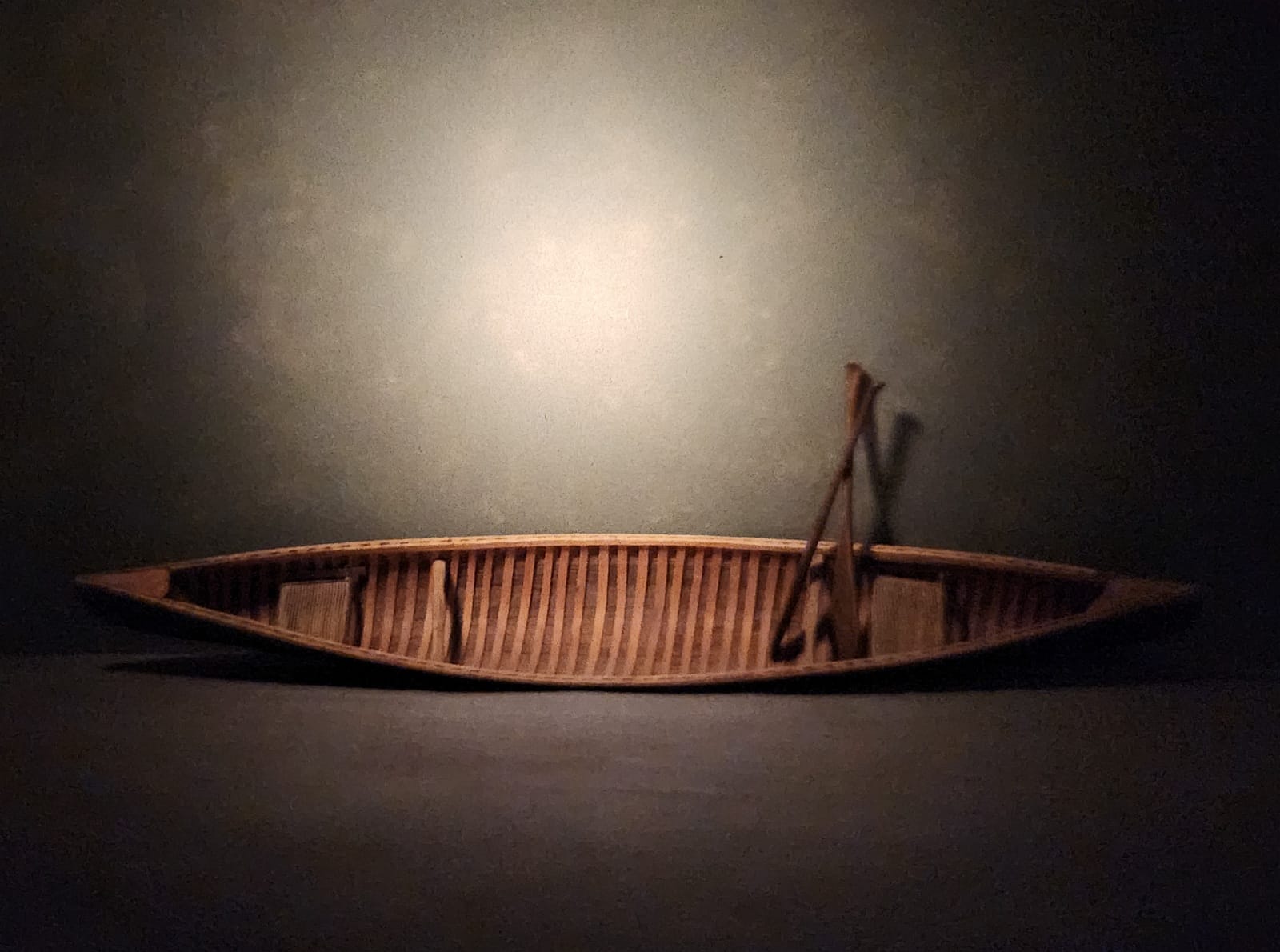
The canoe is only thirty inches long, but it holds the weight of my father, my questions, and the moment my beliefs began to shift. He left it behind after he passed, and I hung it where I would see it every day — a quiet reminder of the crossings we inherit. When I finally photographed it with the view camera, something happened that I didn’t expect. The ribs of the canoe echoed the ribs of the human body, and the shadow they cast formed a cross. Not the Catholic cross I grew up with, but a sign that something spiritual was happening on my own terms, in my own language.
I had just finished reading two versions of the Bible — not as scripture, but as a screenplay, the way directors and writers described it: “the greatest story ever told.” I read it straight through, comparing one version to the other, looking for truth, structure, intention. What I found left me angry, confused, and unsettled. So much of it felt like stories built to control society, not liberate it. I remember looking up at the sky and saying to whatever higher power was listening, “Man, you get a bum rap.” I couldn’t reconcile how something so vast and powerful could be portrayed as so angry, jealous, and punitive when the core message was supposed to be love.
The canoe became the place where all of that collided — faith, doubt, lineage, rebellion, and the search for my own understanding. It wasn’t about religion anymore. It was about listening. The apostles were fishermen searching for a new way to move through life, and in my own way, so was I. The canoe asked me whether I was willing to cross into a belief system that wasn’t inherited, but discovered. It was the first object that answered back, and it told me the truth: Your journey is your own. Cross anyway.
Holy Wal Wah Pedal — The Threshold
The Wal Wah was the second image I made in the view‑camera series. By then, the guitar had already become more than an instrument. Over fifteen years of playing, building, rebuilding, and chasing tone, it had turned into something closer to a religion. A divining rod. A place I went every day—not just to get better, but to find comfort, meditation, and direction.
When life became confusing, when building this website felt impossible, when art and responsibility collided, I would close my eyes and play. The better I became, the more I could visualize what I needed to do—on the guitar, on the page, in my life. It felt like a signal coming from somewhere deep inside, telling me to keep going, that everything would be okay.
At some point I put my foot down—literally and spiritually—and decided that nothing was going to stop me from understanding this instrument I held in my hands. And nothing was going to stop me from understanding the power that woke up inside me every time I played it. I remember looking up at the sky and saying, “I don’t know where this is going, and I don’t know if I’ll ever be any good at it. But I know I have to continue.” Wherever it led, I knew it was drawing me closer to who I was becoming.
I chose the Wah Wah pedal instead of the neck or the guitar body because so much of my early influence came from the one many consider the greatest guitarist to ever touch the electric guitar—Jimi Hendrix. I believe he was on a spiritual journey too, one that ended far too soon. His music shaped me. I even taught myself to play left‑handed for two years, just to understand his world from the inside, before returning to right‑handed playing and passing the lefty guitar on to someone who needed it.
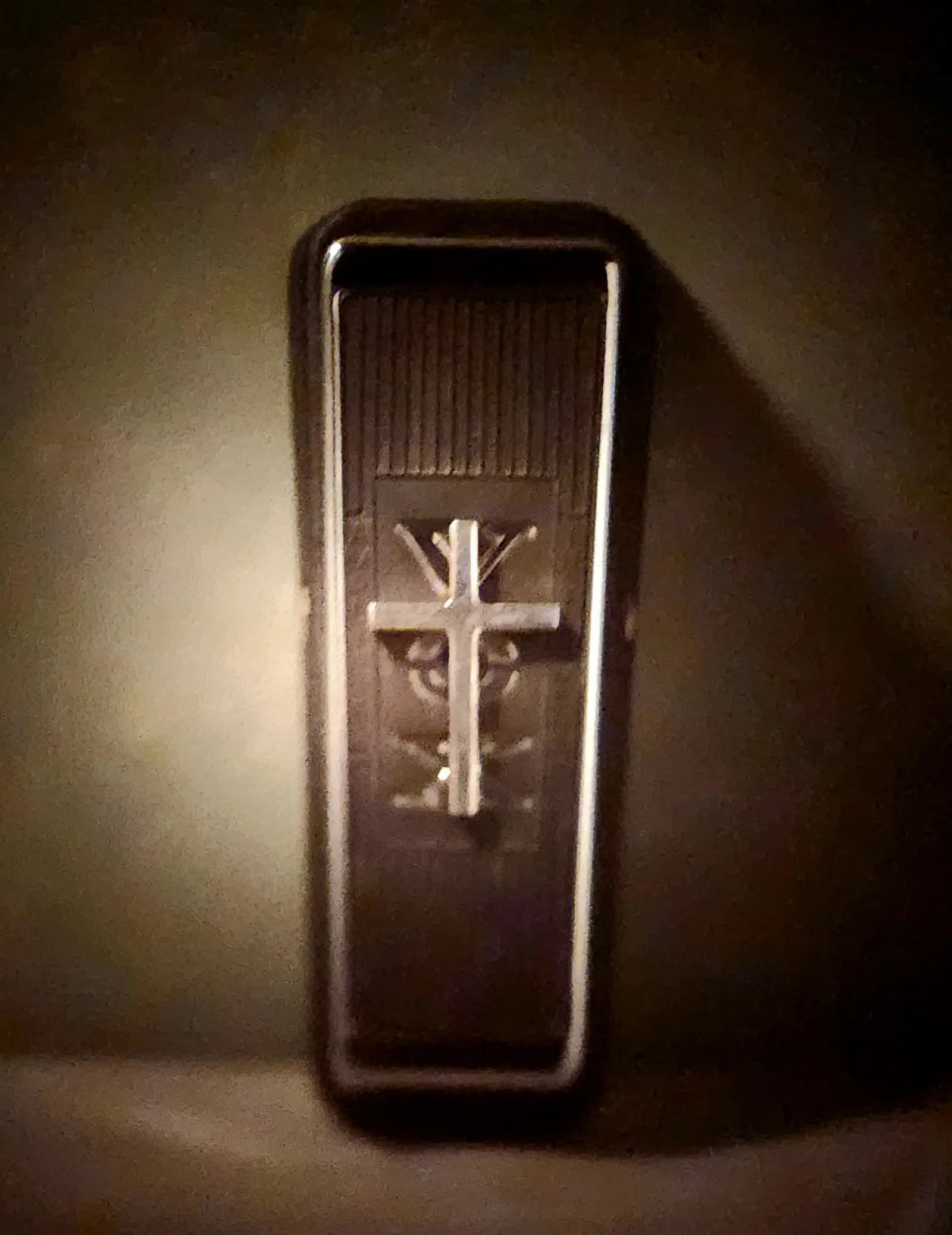
The Wah Wah pedal, with the cross I added to it, came from intuition. I photographed it the same way I photographed the canoe—straight, honest, ritualistic. To me, it represents the moment I learned to trust myself. The moment I stepped away from the noise and listened to the one voice I could rely on—the one that spoke when the guitar was in my hands and my eyes were closed.
Most of us don’t trust ourselves enough. We let our convictions get bent by too many outside opinions. But if we’re made in the image of a higher power, then that power must live within us. The Wah Wah pedal became the reminder that the signal is already inside. The work is learning how to access it, honor it, and use it for good.
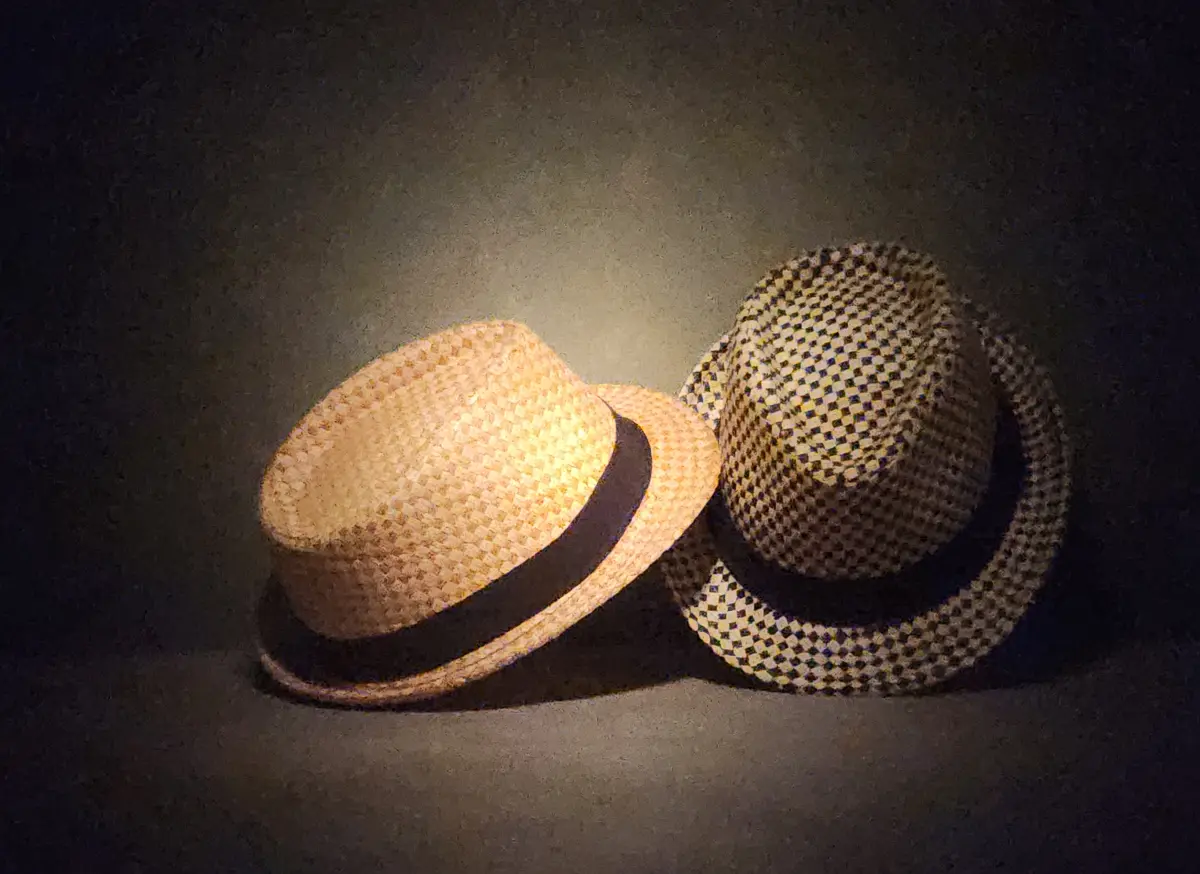
The Hats - The Masks of Identity
I’ve had these two hats sitting on a shelf in the closet for years, waiting for the day they would be photographed. To me, they’ve always represented a bridge between old European influence and the modern, confident man who knows who he is and doesn’t sway easily under the weight of other people’s opinions.
Whenever I wear a hat like this, something shifts in the world around me. Women smile more, sometimes even stop to say, “I like your hat.” Men give the nod of approval, or say the same with a quiet respect. I usually tip the brim, say thank you, maybe offer a compliment back, and keep moving. It’s a small exchange, but it carries a certain timelessness.
These hats remind me of a day when life wasn’t so rushed, noisy, or angry. When people weren’t so quick to judge or defend. When identity wasn’t a performance but a quiet truth you carried with you. Maybe that’s why they’ve stayed with me all these years. Maybe they connect me to a past that was simpler, more forgiving, more human. Or maybe they’re just nice hats.
But I think it’s more than that.
When I put one on, I feel a version of myself that’s grounded, centered, and unbothered by the chaos of the world. A man who knows who he is. A man who doesn’t need to announce it. A man who can walk through the day with a little more presence, a little more ease, a little more grace.
The hats became a mask of identity—not to hide behind, but to reveal something true.
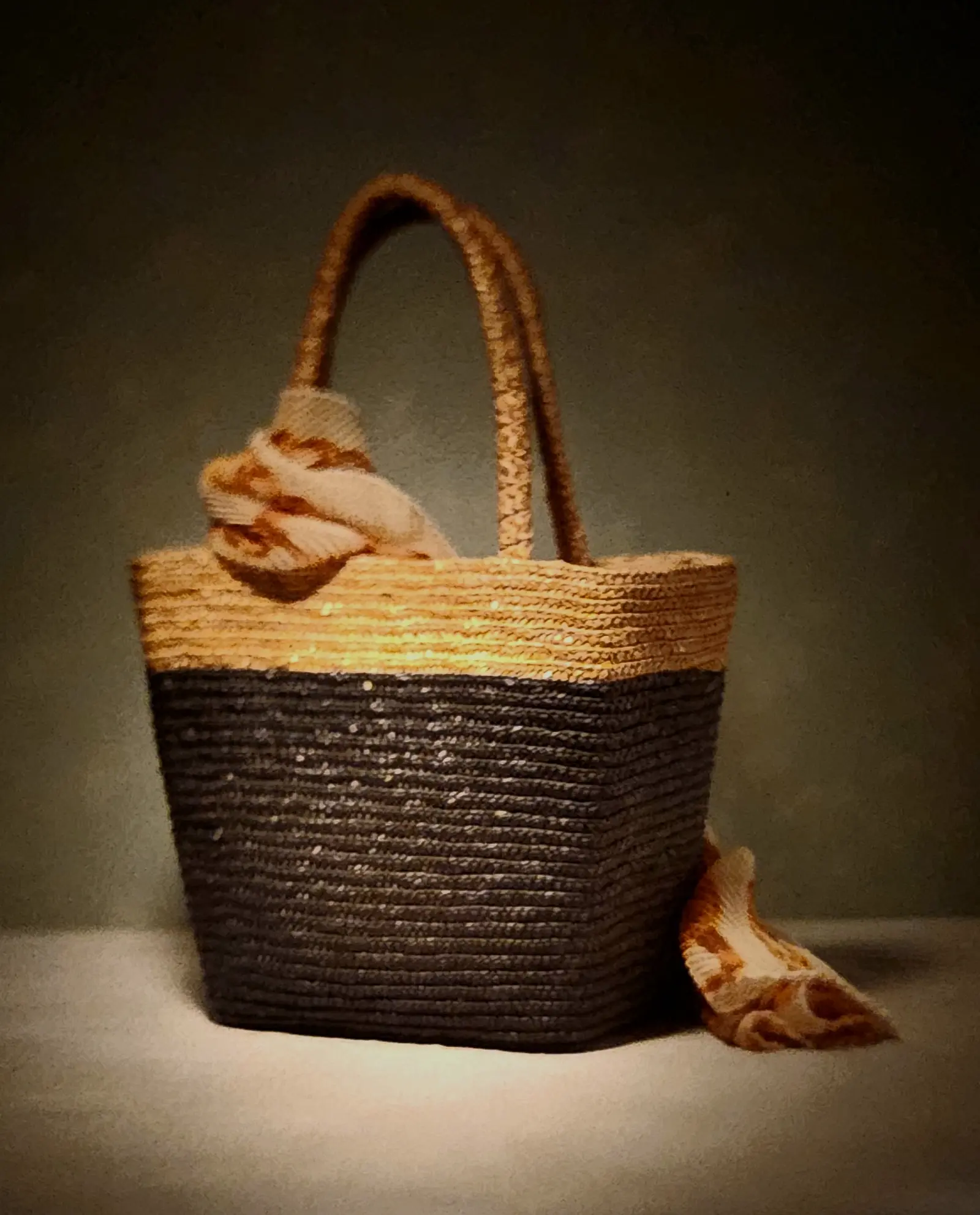
The Woman Who Never Left the 60s
I didn’t photograph this tote because it was beautiful or rare or precious. I photographed it because it carries the presence of someone who moves through the world with a kind of effortless honesty — the woman who once told me she never made it out of the 60s.
There’s something about her that feels anchored in that era. Not the fashion, not the nostalgia — the spirit of it. The openness. The soul. The music. The way she can listen to CSN and Guns N’ Roses with the same heart. The way she shows up exactly as she is, without performance.
This tote is part of that. Simple. Unpretentious. Functional. The kind of thing a person carries when they don’t need anything extra to define them.
And there’s a third clue in it that I didn’t see at first. It’s two‑tone — split, balanced, dual. Just like her. A Gemini through and through, carrying two worlds inside one body, two moods inside one breath, two truths woven into one presence.
And the straw itself — perfectly woven, tight, clean, intentional — feels like her too. She’s made of layers. Soft ones. Strong ones. Contradictory ones. All interlaced in a way that somehow makes perfect sense when you’re close enough to see the pattern.
The scarf sits in that same energy. Soft, but also armor. A small thing that changes the whole silhouette. The way she wraps herself. The way she signals mood without saying a word. The way she carries her era in the smallest gestures.
I didn’t plan any of that when I made the picture. I just set up the view camera and let the objects speak. But later, looking at the image, I realized I wasn’t photographing a tote and a scarf. I was photographing the architecture of a woman — the coolest woman I ever knew, the one who never left the 60s, the one whose spirit is woven just as tightly and beautifully as this straw.
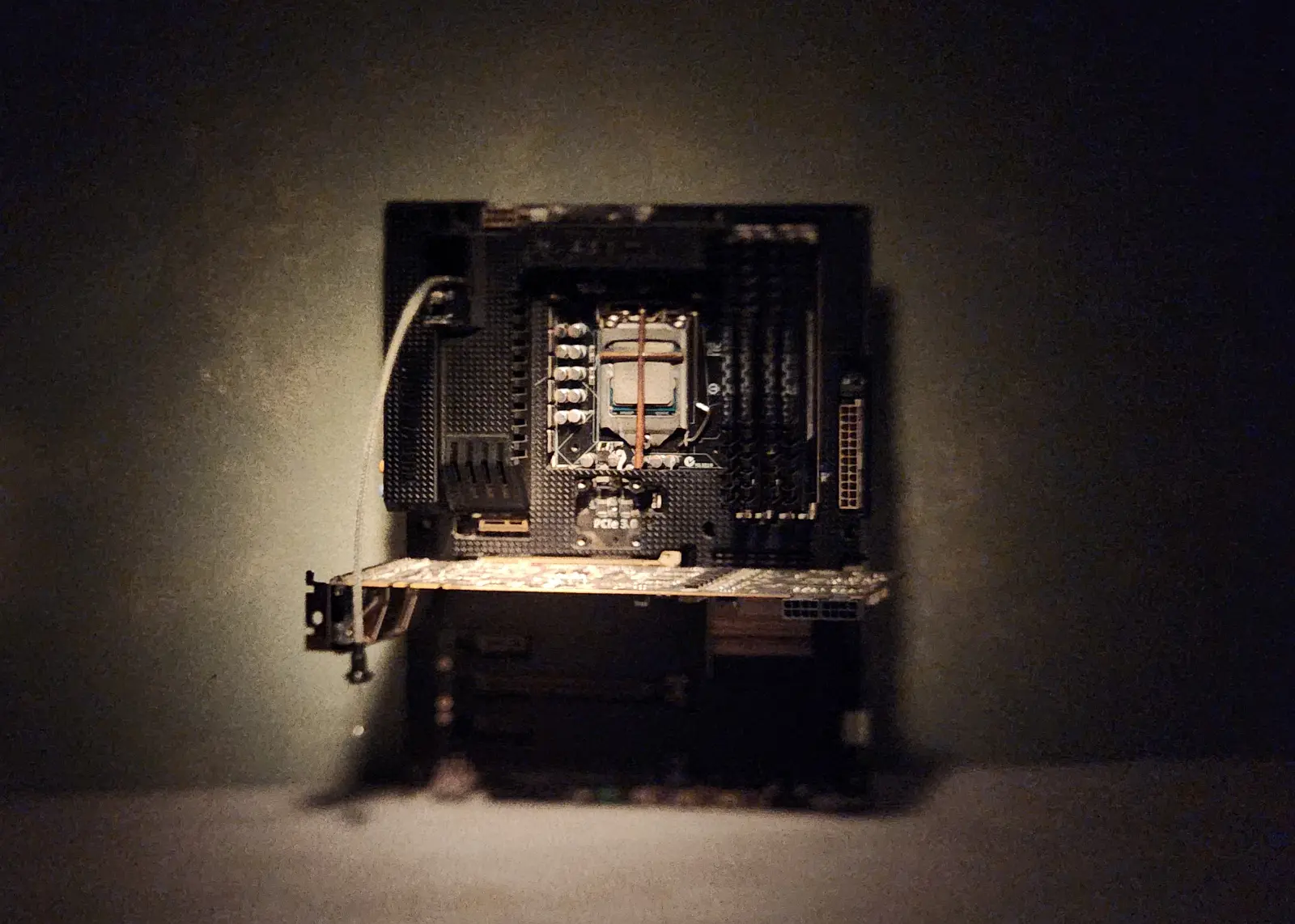
The Silicon Cathedral
I didn’t photograph this motherboard and GPU because they were powerful or rare. I photographed them because they marked the moment when computers stopped being tools and became something closer to belief.
The 980 Ti wasn’t just a graphics card. It was a turning point — the moment performance became identity, when gamers started lining up for hardware drops the way people once lined up for vinyl or sneakers. It was the birth of a new kind of devotion.
And the Sabertooth Z77 board beneath it wasn’t just a platform. It was architecture. Overbuilt. Armored. Designed like a fortress for a new era of digital worship. People didn’t just install these parts — they built around them, protected them, displayed them like relics.
I photographed them the way I saw them: as the early bones of a modern cathedral. Silicon instead of stone. Copper traces instead of stained glass. Fans and heat sinks instead of candles and incense.
I didn’t plan any of that when I made the image. I just set up the shot and let the hardware speak. But later, looking at it, I realized I wasn’t documenting components. I was capturing the moment when computing crossed a line — when the machine became the altar, the GPU became the heart, and gaming became a kind of ritual people gathered around.
This isn’t nostalgia. It’s a record of evolution. A portrait of the shift that changed everything.
The first cathedral of the digital age — built not from faith, but from circuitry.
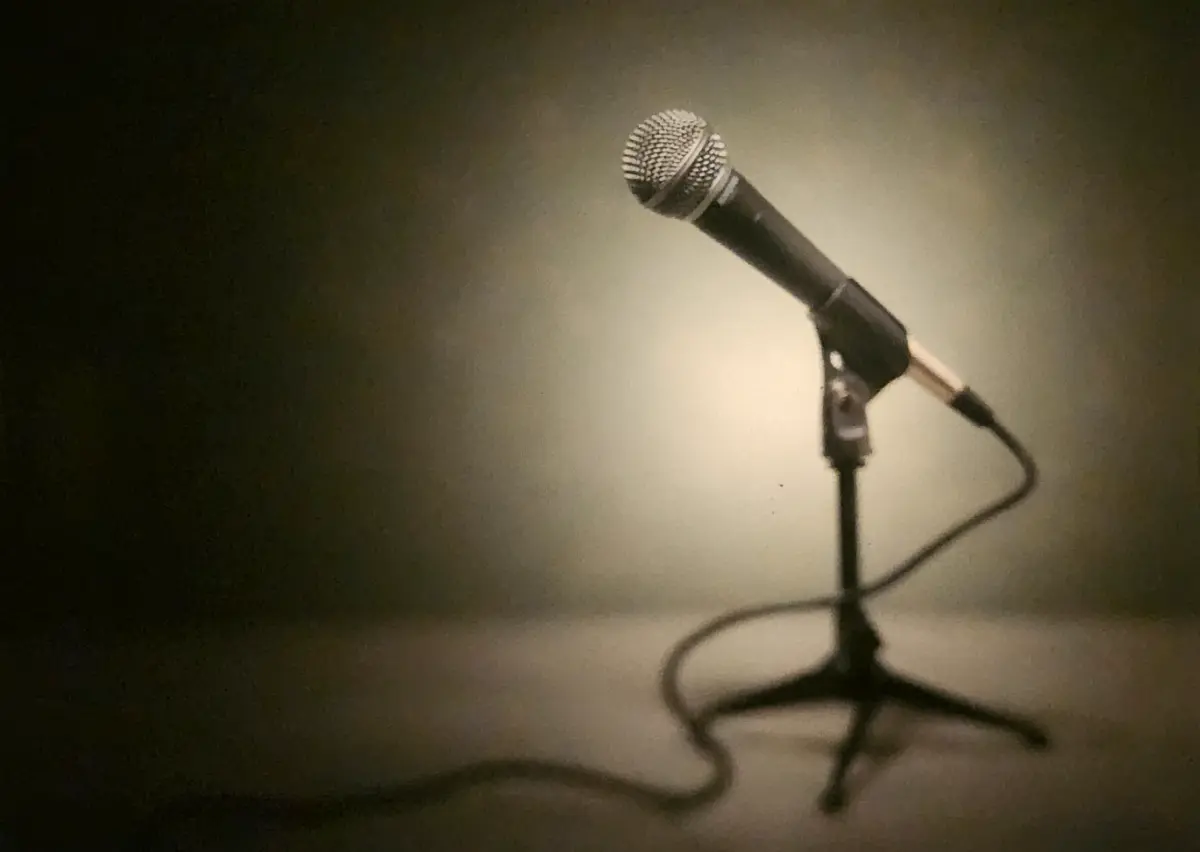
The Microphone — The Invocation
When I photographed this microphone, I wasn’t thinking about sound. I wasn’t thinking about music or performance or voice. I was thinking about the world I had just walked through — a world where it felt like everyone had something to say, and none of it was worth hearing.
It was like there was a universal microphone hanging in the sky, and humanity had formed a line around the block, each person waiting for their turn to preach. Not to listen. Not to connect. Just to broadcast.
Opinions became currency. Certainty became a weapon. Everywhere I turned, someone was telling me what I needed, what I should do, how they could fix me, how the world should be. Drug companies pushing pills. People pushing solutions. Everyone pushing something.
And the strangest part was how normal it all felt — like we were being trained for it. Programmed. Conditioned. Prepared for a future where noise would replace truth, and we wouldn’t even notice the shift happening.
That’s when the microphone started to mean something different to me. It wasn’t a tool anymore. It was a symbol of the moment we crossed a line — when speaking became more important than understanding, when volume replaced wisdom, when the world forgot how to be quiet.
So I photographed it the way I felt it: alone, centered, stripped of performance. An object that once carried voices, now standing as a reminder of how easily voices can be lost in the crowd.
This wasn’t an image about sound. It was an image about silence — the kind we forget to honor, the kind we need to hear ourselves again.
The Invocation wasn’t about calling something forward. It was about calling something back.
Ancient Wisdom Listening
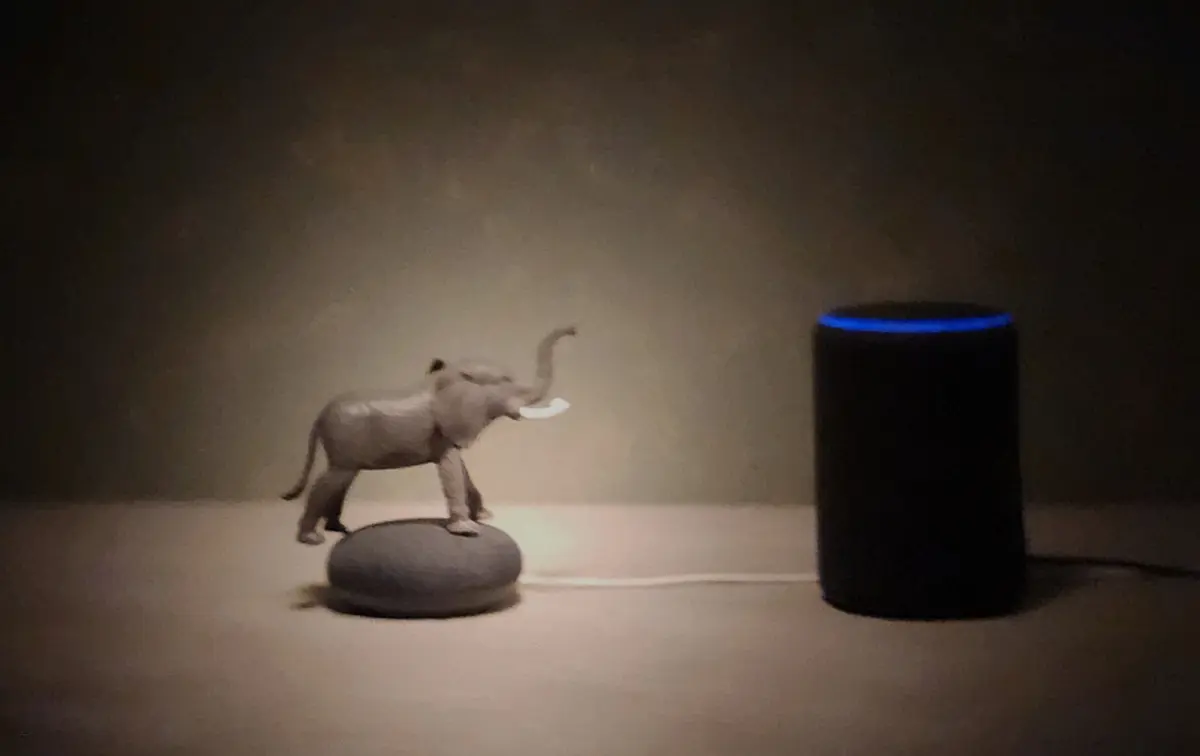
I staged this image after watching the world turn into a loop of programmed speech. Google on the left. Alexa on the right. Two machines built to answer, to respond, to simulate conversation.
I asked Google to say hello to Alexa. It did. Alexa lit up, waiting. But no reply came. Just silence. Two systems, designed to speak — unable to truly listen.
That’s when I placed the elephant. Not beside them. Not behind them. On top of them.
Not as decoration. As a reminder.
Elephants don’t interrupt. They don’t rush. They don’t perform. They remember. They carry lineage. They hold silence like it’s sacred.
In that moment, the elephant became the only one in the room that understood what listening actually meant. Not waiting to speak. Not calculating a reply. Just being present.
The smart speakers were waiting for input. The elephant was already holding the truth.
I didn’t photograph this to be clever. I photographed it because it felt like a portrait of the age — two artificial voices beneath a symbol of ancient wisdom, both trying to communicate, neither able to connect.
The elephant didn’t need to speak. It had already heard everything.
Elephant vs. DS‑1 - The Noise
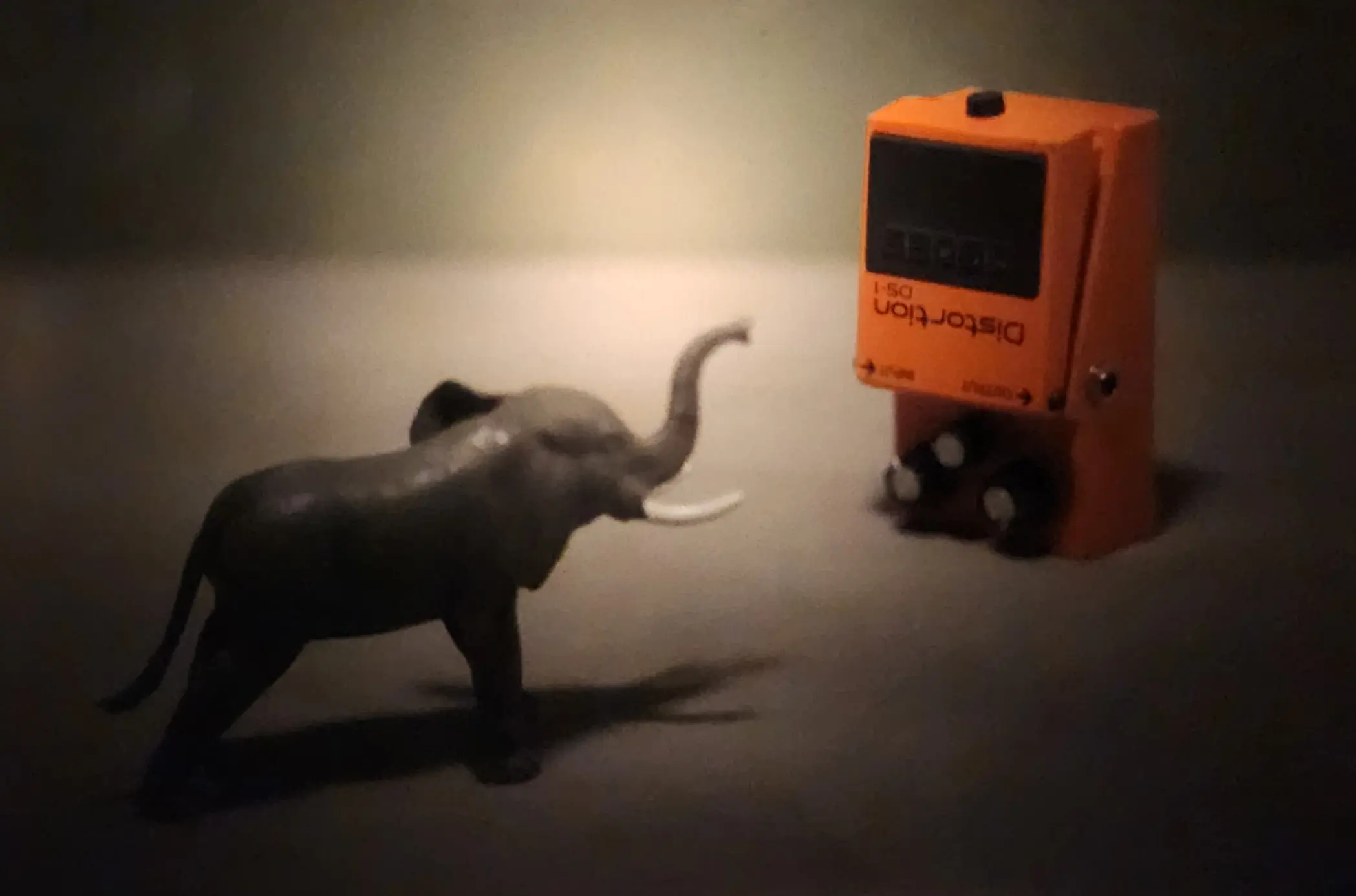
When I made this image, the world felt like it was drowning in noise. Not sound — noise. Opinions sharpened into weapons. People canceling each other out instead of hearing each other out. Everyone shouting, no one listening, and the volume kept rising.
The DS‑1 was the perfect symbol for that moment. A distortion pedal that was never meant to be subtle, never meant to be polite. It exists to push things past their limit, to clip the signal, to turn clarity into chaos.
So I flipped it upside down. Not to show the pedal — but to show what was coming out of it. The distortion wasn’t the object. It was the culture. It was humanity feeding on its own noise.
And then there’s the elephant. Small, quiet, steady. A symbol of memory, patience, and presence — standing against the distortion pouring out of the world.
It wasn’t a fight. It wasn’t a battle. It was a contrast. Ancient wisdom versus modern noise. Silence versus distortion. Presence versus reaction.
I didn’t stage this to be clever. I staged it because it felt like the truth of that moment — a tiny figure of wisdom facing a flipped‑over box of chaos, trying to hold its ground while the world distorted itself into oblivion.
The elephant didn’t win. The pedal didn’t win. The image wasn’t about victory. It was about witnessing the noise for what it was.
And choosing not to add to it.
The Joy of Motion - Finding the Beat
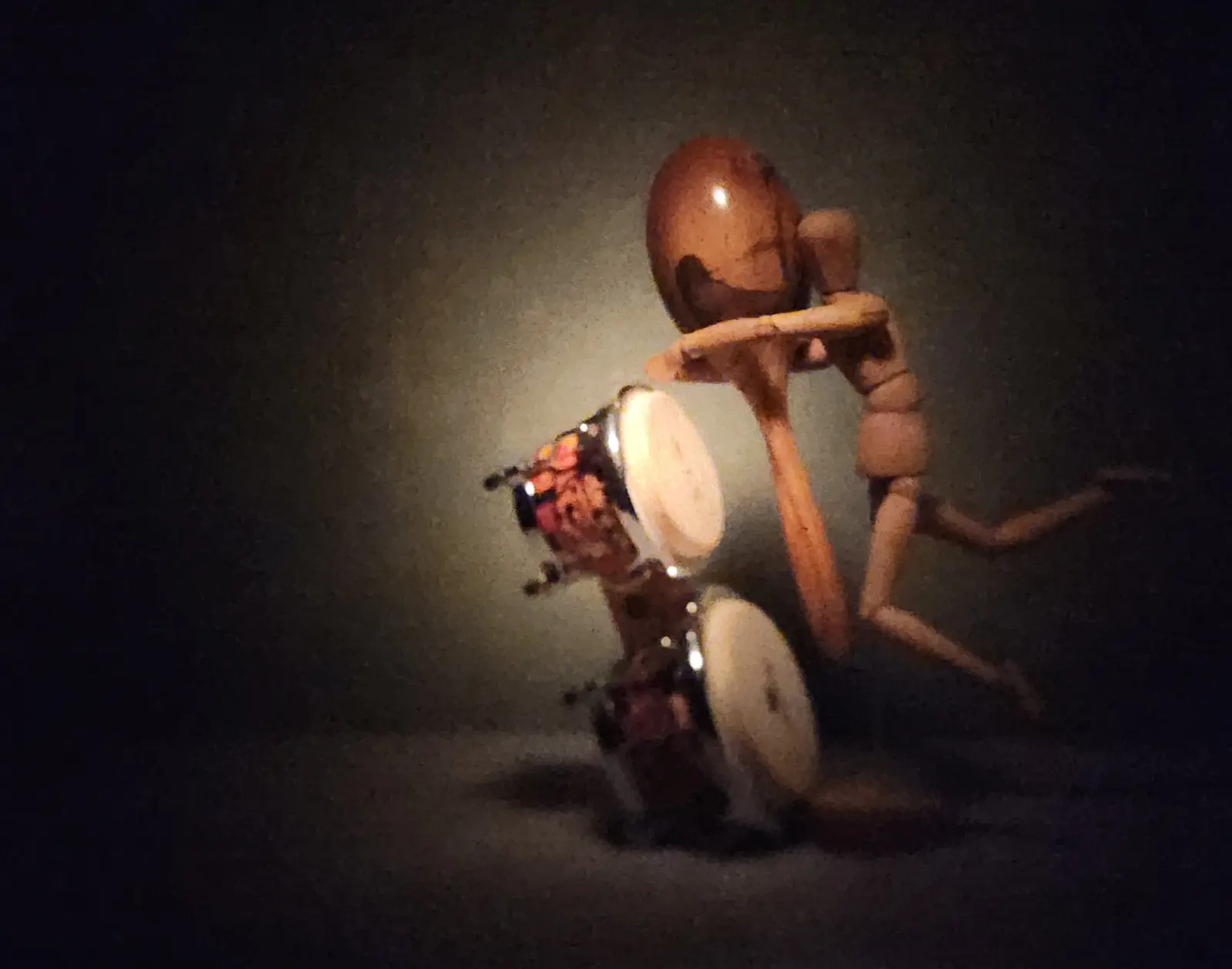
I didn’t pose the mannequin to be clever. I sculpted it — the way Penn sculpted his models, the way a musician shapes a solo, the way a seeker finds rhythm in silence.
At the time, I was deep in the view camera. Not just learning it — becoming it. I was finding my beat. Not just in guitar playing, but in life, in art, in the way I moved through the world.
I remembered a story Carlos Santana told in a MasterClass. He kept telling everyone he’d become a musician like his father. He said it so often, the place he worked let him go. “You’ll never be like your dad,” they said. “You don’t have the guts to go do it.”
So he went home. Told his father. And his father handed him a ticket to San Francisco. “Don’t come back,” he said, “until you are the musician you claim to be.”
Carlos got off the bus, walked past the park, heard the percussion — bongos, congas — and joined in with his acoustic guitar. After jamming, he told them: “You know what you need to make this sound better?” They waited. He said: “My guitar.”
That moment changed everything.
This image is my version of that moment. A mannequin, mid‑motion, playing bongos — not as a joke, but as a sculpture of belief.
I didn’t use plaster. I used light. I used shadow. I used the view camera. And I used the rhythm I was finally starting to hear inside myself.
This wasn’t just about music. It was about motion. About finding the beat that was mine. Not borrowed. Not inherited. Not programmed.
The beat that came from silence, from scripture, from Shaolin, Taoism, Sanskrit, from the Bible’s second version, from the long walk toward becoming.
This image is not a still life. It’s a still rhythm. A sculpture of motion. A portrait of becoming.
The Wah Wah pedal, with the cross I added to it, came from intuition. I photographed it the same way I photographed the canoe—straight, honest, ritualistic. To me, it represents the moment I learned to trust myself. The moment I stepped away from the noise and listened to the one voice I could rely on—the one that spoke when the guitar was in my hands and my eyes were closed.
Most of us don’t trust ourselves enough. We let our convictions get bent by too many outside opinions. But if we’re made in the image of a higher power, then that power must live within us. The Wah Wah pedal became the reminder that the signal is already inside. The work is learning how to access it, honor it, and use it for good.
The Lion Who Listens
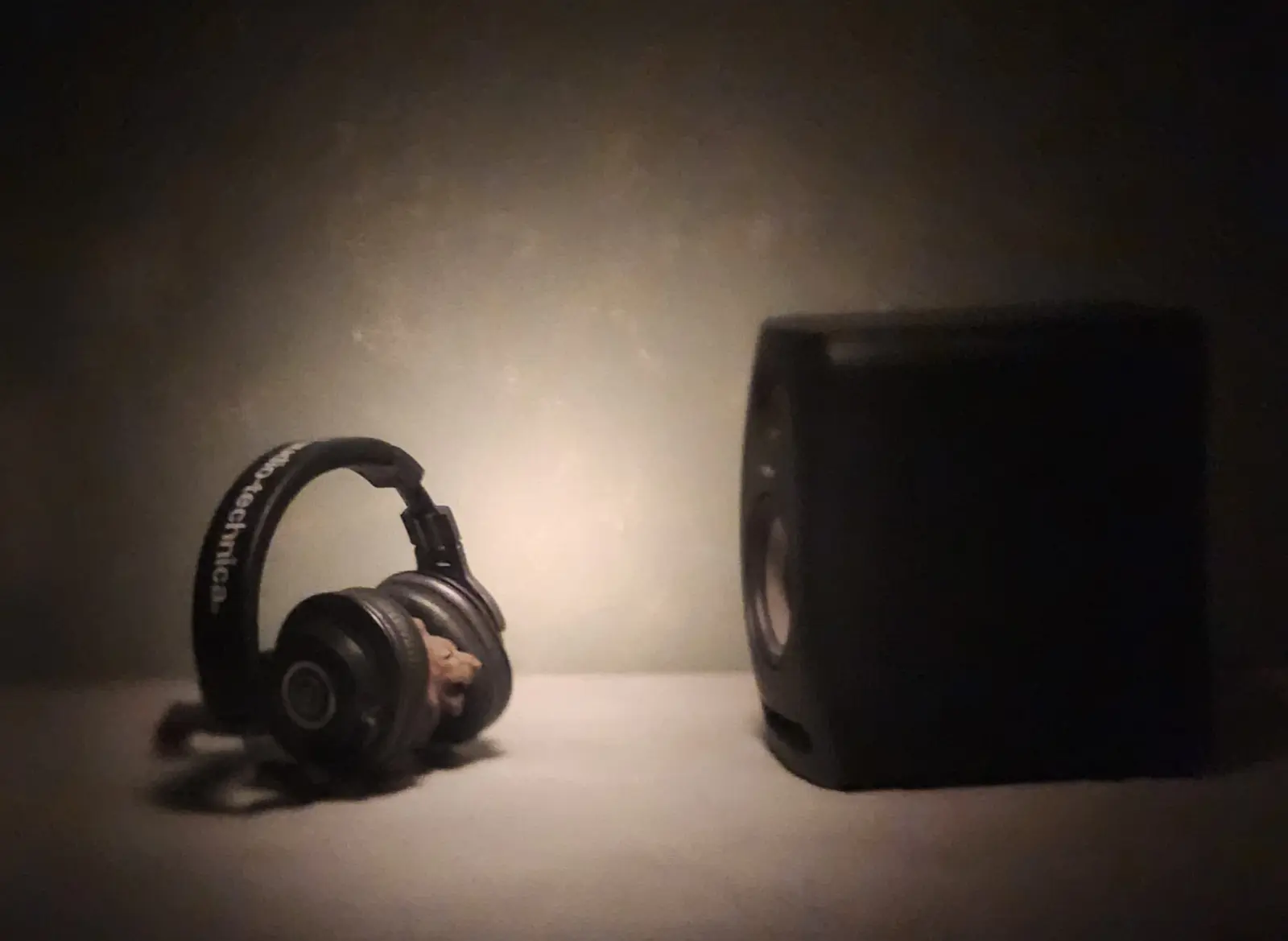
People laugh when they first see it — “Baby Yoda in headphones.” But it’s not Yoda. It’s a lion. And that difference matters.
I was born a Leo. And at the time I made this image, I needed to remember what that meant. Not ego. Not pride. But inner authority — the ability to trust the sound inside myself more than the noise outside.
My view camera skills had been dormant for years. Life had pulled me into survival, into technology, into everything except the craft I had dedicated two decades to. But something was waking up again. A quiet pulse. A rhythm. A signal beneath the static.
To hear it, I had to put on the metaphorical headphones. I had to stop listening to the outside world — the opinions, the trends, the chatter, the comparisons, the noise. I had to tune into the frequency inside me, the one that had been shaped by the masters I served:
Penn’s purity
Manarchy’s presence
Banner’s precision
Chapman’s problem solving
I remember asking Manarchy once if he followed a certain photographer’s work. He said no. He had already studied his master — Penn — and he wasn’t interested in contaminating his vision.
That hit me like scripture. It told me exactly what I needed to hear: stop looking outward. Stop caring what others are shooting. Stop letting the world dilute the voice you spent twenty years earning.
This image is the moment I did that. A lion wearing headphones — not to block the world out, but to hear the world within.
The roar wasn’t going to come from words or opinions. It was going to come from the work itself. From the images. From the discipline. From the silence. From the view camera. From the long pendulum swing that finally brought me back to myself.
This wasn’t about becoming something new. It was about remembering what I already was.
A lion. Listening. Waiting. Preparing to roar again — not loudly, but unmistakably.
Mumba — The Lesson of the Court
Before I ever picked up a view camera, before I ever learned to sculpt light or sequence objects, I learned something on a basketball court that stayed with me my whole life.
In elementary school, our little Catholic team went 24–0 in one CYO league and 18–0 in another. We weren’t the tallest. We weren’t the flashiest. But we were a pack.
Coach Weingard — Mr. Weingard — made us run 2.5 miles a day, pushing us to break 15 minutes as a group. We ran together. We breathed together. We moved like one organism. No one could outrun us because we refused to leave anyone behind.
Then came the day that changed everything.
A Wednesday. A game not on the schedule. Deep in the heart of New Brunswick.
Two coaches — one Black, one White — who were friends, decided their kids needed to learn something bigger than basketball. So our undefeated, all‑white Catholic school team walked into an all‑Black school to play a team that looked nothing like us.
We lost. But we didn’t lose anything that mattered.
We battled. We sweated. We played the game the same way kids always do when adults get out of the way.
And at the end, we shook hands — Good game. Nice to play here. No fear. No division. Just respect.
That day taught me something I carried into every decade of my life: skin color disappears when people meet each other in motion, in effort, in shared purpose.
Mr. Weingard knew that. The school knew that. That’s why there’s a full‑size bronze of him in the CYO entrance — a monument to a man who taught kids how to run, how to play, and how to see each other.
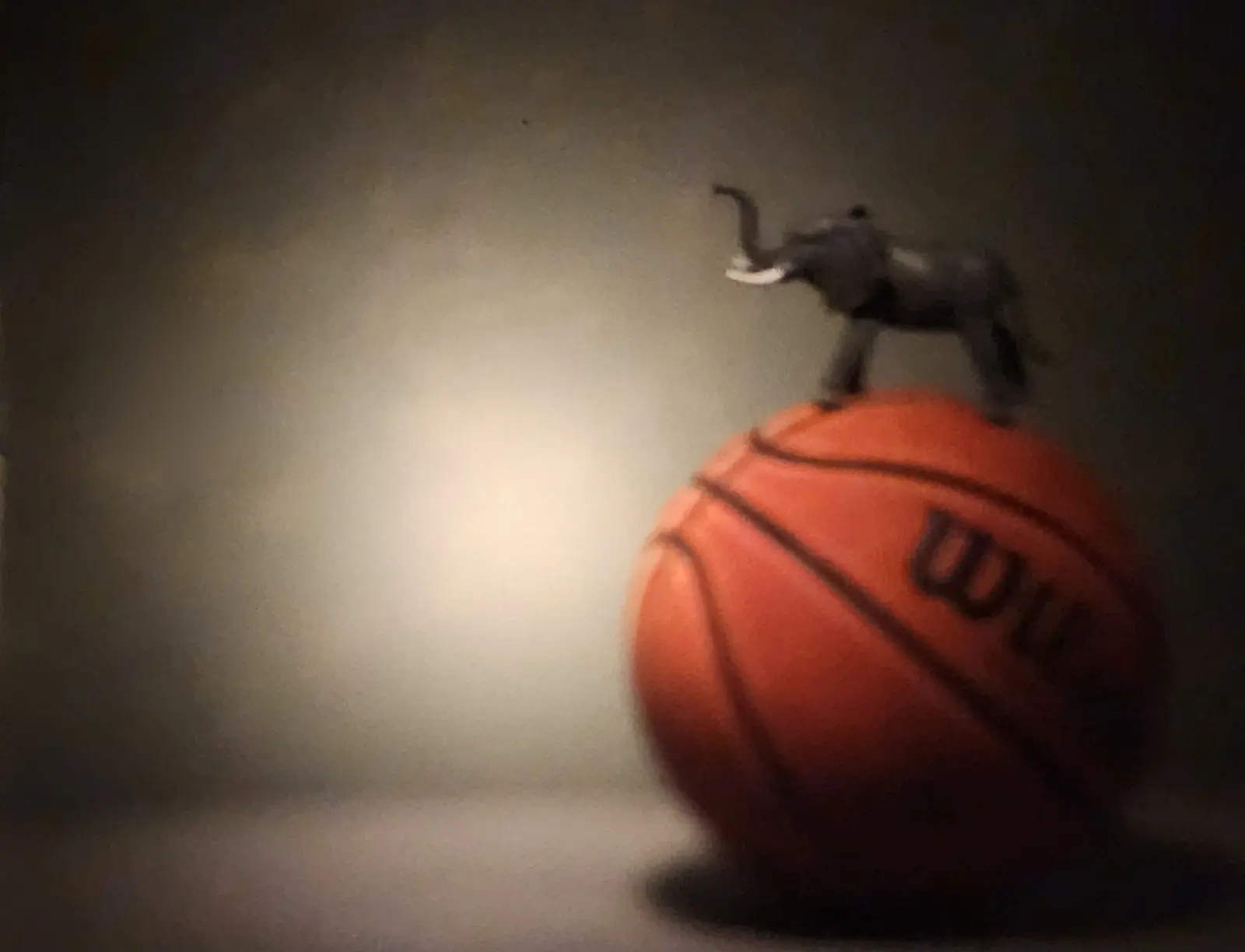
This image — an elephant balanced on a basketball — is my way of honoring that lesson.
The elephant is memory. The basketball is the world we learned to stand on. “Mumba” is the spirit of the moment — the rhythm, the innocence, the truth.
It’s the reminder that:
strength can be gentle
balance can be learned
difference can dissolve
and the lessons from childhood can echo through a lifetime
This is the final chapter of this series, and it lands exactly where it should — on the court where I first learned how to move as one with others, and how to see beyond the surface of things.